
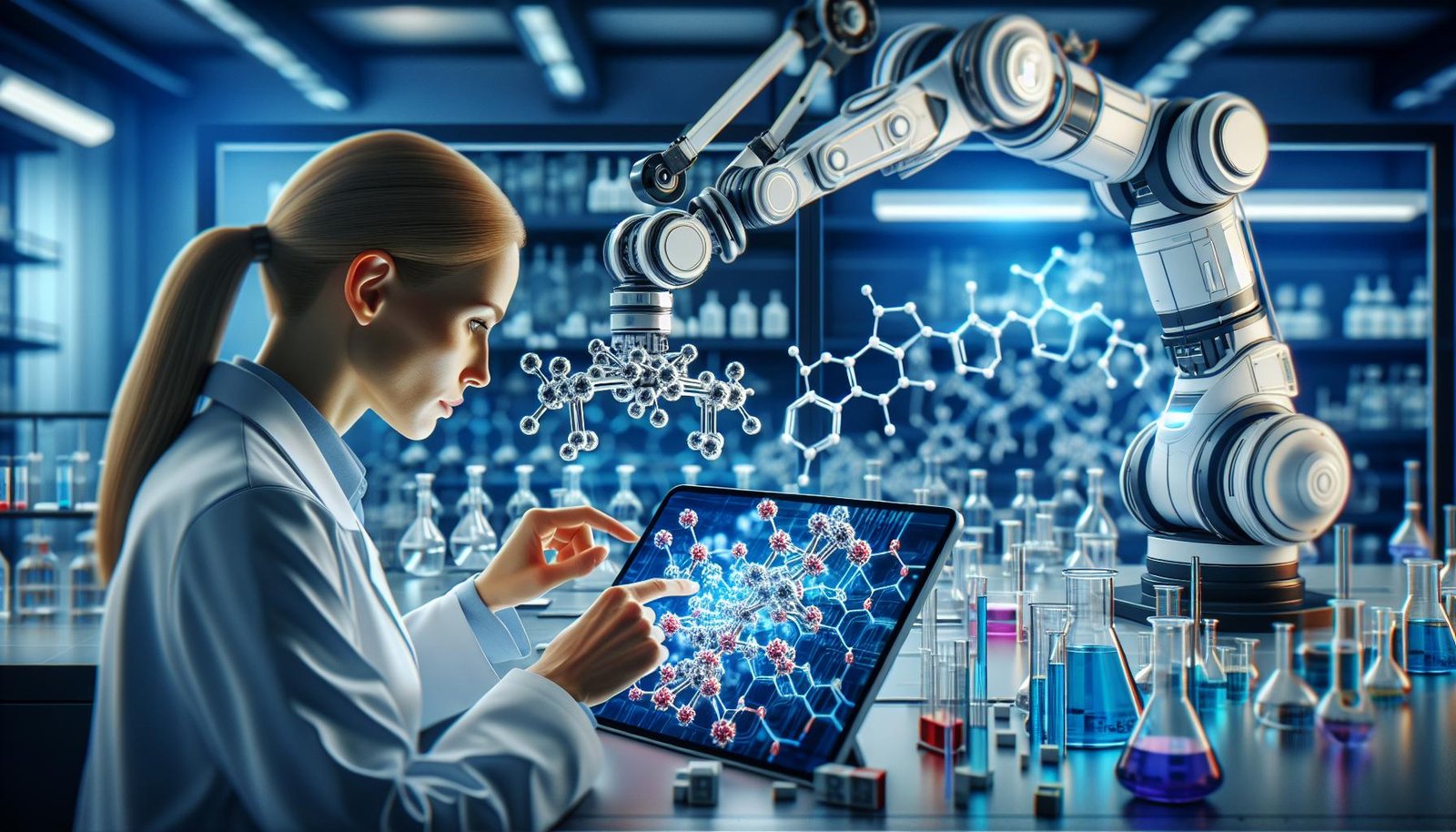
Scientific discovery traditionally requires extensive research, experimentation, observation, and analysis.
Researchers may spend years studying complex biological systems, testing materials, or developing engineering solutions.
Artificial intelligence is creating new opportunities to support this process.
AI systems can analyze large datasets, identify patterns, predict possible outcomes, and help scientists explore research questions more efficiently.
In 2026, AI-powered scientific discovery is becoming an important area of technological development, particularly in life sciences, engineering, materials research, and drug discovery.
McKinsey & Company+1
What Is AI-Powered Scientific Research?
AI-powered scientific research uses machine learning, deep learning, computer vision, and other AI methods to assist researchers in analyzing information and solving scientific problems.
AI does not replace the scientific method. Instead, it can support specific research stages, helping scientists generate hypotheses, process data, and prioritize experiments.
How AI Is Transforming Scientific Discovery
1. Drug Discovery
AI models can help researchers analyze molecular structures, identify possible drug candidates, and prioritize compounds for further investigation.
Laboratory testing and clinical research remain essential before any medicine can be considered safe and effective.
2. Medical Research
Machine learning can help analyze medical images, research datasets, and biological information to support scientific investigation.
3. Materials Science
AI can help researchers predict material properties and investigate possible new materials for batteries, electronics, and industrial applications.
4. Climate Research
AI can assist with weather modeling, environmental monitoring, climate data analysis, and prediction systems.
5. Engineering
AI tools can support simulation, design optimization, testing, and analysis of complex engineering systems.
6. Laboratory Automation
Robotic systems and AI software can help automate selected laboratory workflows, collect measurements, and organize experimental results.
Technologies Behind AI Scientific Discovery
-
Machine learning.
-
Deep learning.
-
Neural networks.
-
Natural Language Processing.
-
Computer vision.
-
High-performance computing.
-
Robotics and laboratory automation.
-
Scientific simulation.
Benefits of AI in Scientific Research
Faster Data Analysis: AI can process large research datasets and identify patterns that may be difficult to detect manually.
Research Assistance: AI can help summarize scientific literature and organize research information.
Experiment Prioritization: Predictive models can help researchers decide which experiments to investigate further.
Design Optimization: AI can explore possible designs and identify promising alternatives.
Interdisciplinary Research: AI can help connect methods and information from different scientific fields.
Limitations and Ethical Challenges
AI-powered research must be used carefully.
Some important challenges include:
-
Incorrect predictions.
-
Biased training data.
-
Reproducibility problems.
-
Limited transparency.
-
Data privacy concerns.
-
Scientific misinformation.
-
Overdependence on automated systems.
Researchers must validate AI-generated results through appropriate experiments, independent analysis, and established scientific methods.
The Future of AI in Science
The combination of AI, robotics, advanced computing, and scientific databases could change how research is conducted.
Future laboratories may use AI systems to suggest experiments, robotic equipment to perform selected procedures, and automated analysis systems to interpret results.
This approach could help researchers investigate complex problems more efficiently, although the level of automation will depend on the scientific field and the reliability of the systems.
Frequently Asked Questions
Q1. How is AI used in scientific research?
AI is used for data analysis, prediction, image processing, literature assistance, molecular research, and experimental planning.
Q2. Can AI discover new medicines?
AI can help identify and prioritize potential drug candidates, but laboratory research and clinical trials are necessary to establish safety and effectiveness.
Q3. Can AI replace scientists?
No. AI can assist with specific tasks, but scientific judgment, experimental design, validation, and accountability remain essential.
Q4. Which industries can benefit from AI scientific research?
Healthcare, pharmaceuticals, biotechnology, agriculture, materials science, energy, and engineering are among the potential beneficiaries.
Conclusion
Artificial intelligence is opening new possibilities for scientific research and engineering. By helping scientists analyze data, explore hypotheses, and optimize experiments, AI can support the discovery process. Its greatest value will come from combining computational intelligence with human expertise and reliable scientific validation.