
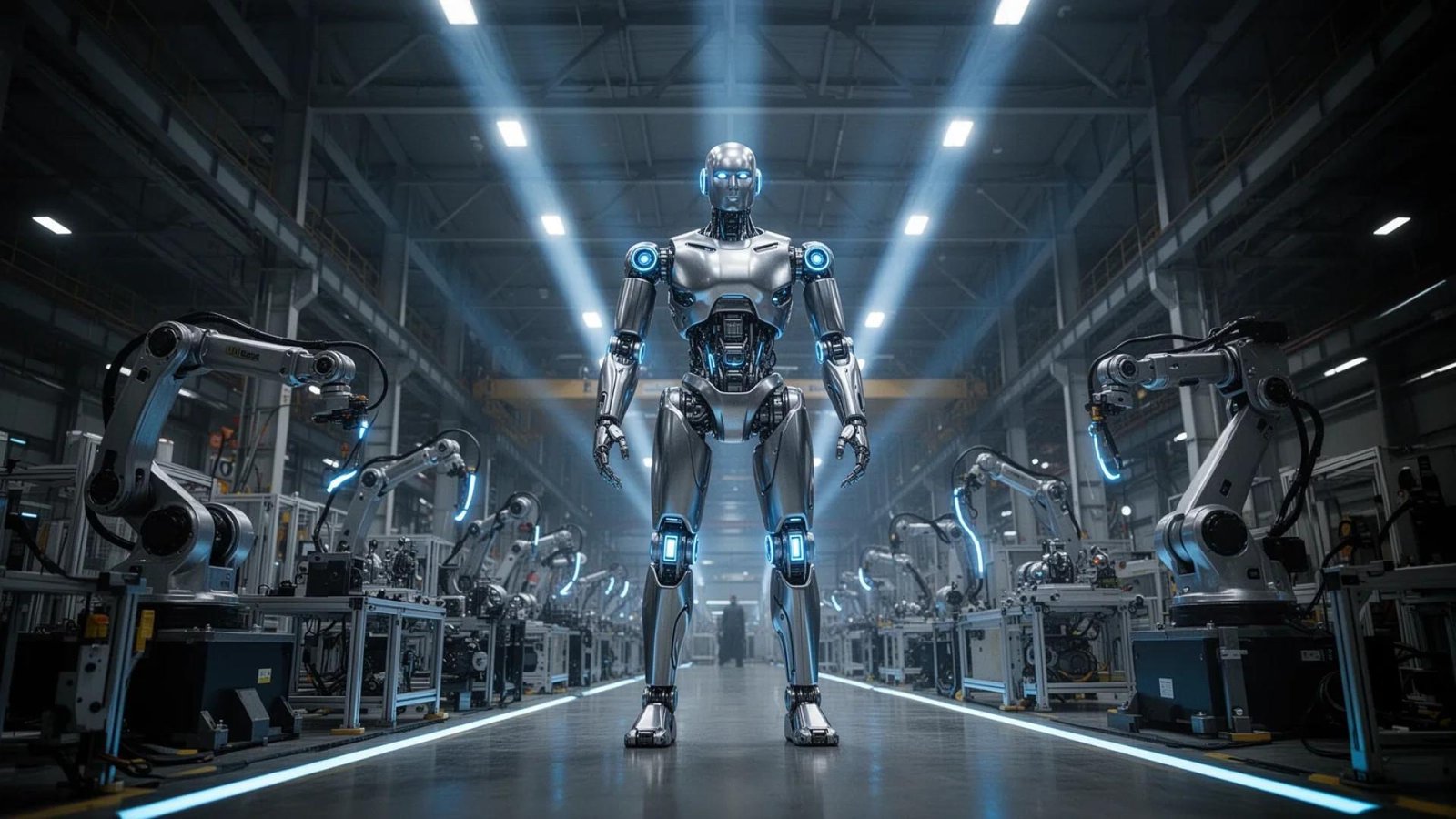
Robotics is entering an exciting phase as artificial intelligence becomes more closely integrated with physical machines.
Traditional industrial robots were designed to perform specific repetitive tasks. Modern intelligent robots are being developed to understand environments, process information, and interact with objects and people.
Humanoid robots are especially interesting because their human-like body structures may allow them to operate in environments designed for people.
What Are Humanoid Robots?
Humanoid robots are machines designed with a human-like physical structure. They may include a head, torso, arms, hands, and legs.
Their purpose is not necessarily to look exactly like humans. Instead, their design can help them interact with tools, doors, stairs, workstations, and other objects in human environments.
How Do Humanoid Robots Work?
Humanoid robots generally combine several technologies:
-
Artificial intelligence.
-
Computer vision.
-
Motion planning.
-
Cameras and depth sensors.
-
Motors and actuators.
-
Balance and navigation systems.
-
Machine learning.
-
Human-robot interaction.
These technologies help robots understand surroundings, identify objects, plan movements, and perform physical actions.
Major Applications of Humanoid Robots
1. Manufacturing
Robots can potentially support assembly, material handling, inspection, and repetitive industrial operations.
2. Warehousing
Intelligent machines may help move materials, sort packages, and support inventory operations.
3. Healthcare Assistance
Robots could support logistics, supply transportation, and selected assistance tasks under professional supervision.
4. Household Assistance
Future robots may help with simple household activities, object handling, and home automation.
5. Dangerous Environments
Robots can be useful in hazardous industrial environments where direct human exposure should be minimized.
Important Humanoid Robotics Companies
-
Tesla – Developing the Optimus humanoid robot.
-
Boston Dynamics – Known for advanced mobile robots and humanoid robotics research.
-
Figure AI – Developing general-purpose humanoid robots.
-
Agility Robotics – Developing Digit for logistics and industrial applications.
Challenges Facing Humanoid Robots
Despite impressive progress, several challenges remain:
-
High development and manufacturing costs.
-
Battery capacity and operating time.
-
Reliable movement in unpredictable environments.
-
Safety around humans.
-
Maintenance and hardware reliability.
-
Real-world task understanding.
-
Integration with existing workplaces.
Physical AI and humanoid robotics are identified as important emerging technology areas, but widespread commercial deployment still depends on practical reliability and economic value.
juniperresearch.com+1
Frequently Asked Questions
Q1. What is a humanoid robot?
A humanoid robot is a machine with a human-like physical structure designed to perform tasks in environments built for people.
Q2. Can humanoid robots replace humans?
They may automate selected physical tasks, but widespread replacement is limited by cost, safety, reliability, and the complexity of real-world work.
Q3. Are humanoid robots powered by AI?
Many modern humanoid robots use AI for perception, planning, navigation, and task execution.
Q4. Where are humanoid robots used?
Research and development focuses on manufacturing, logistics, research, assistance, and other controlled environments.
Conclusion
Humanoid robots represent an important intersection of artificial intelligence, mechanical engineering, and automation. Although they still face technical and economic challenges, improvements in AI and robotics could make them increasingly useful in industrial and everyday environments.